
A New Market is Launching.

Medical Opportunities in the Emerging Space Economy
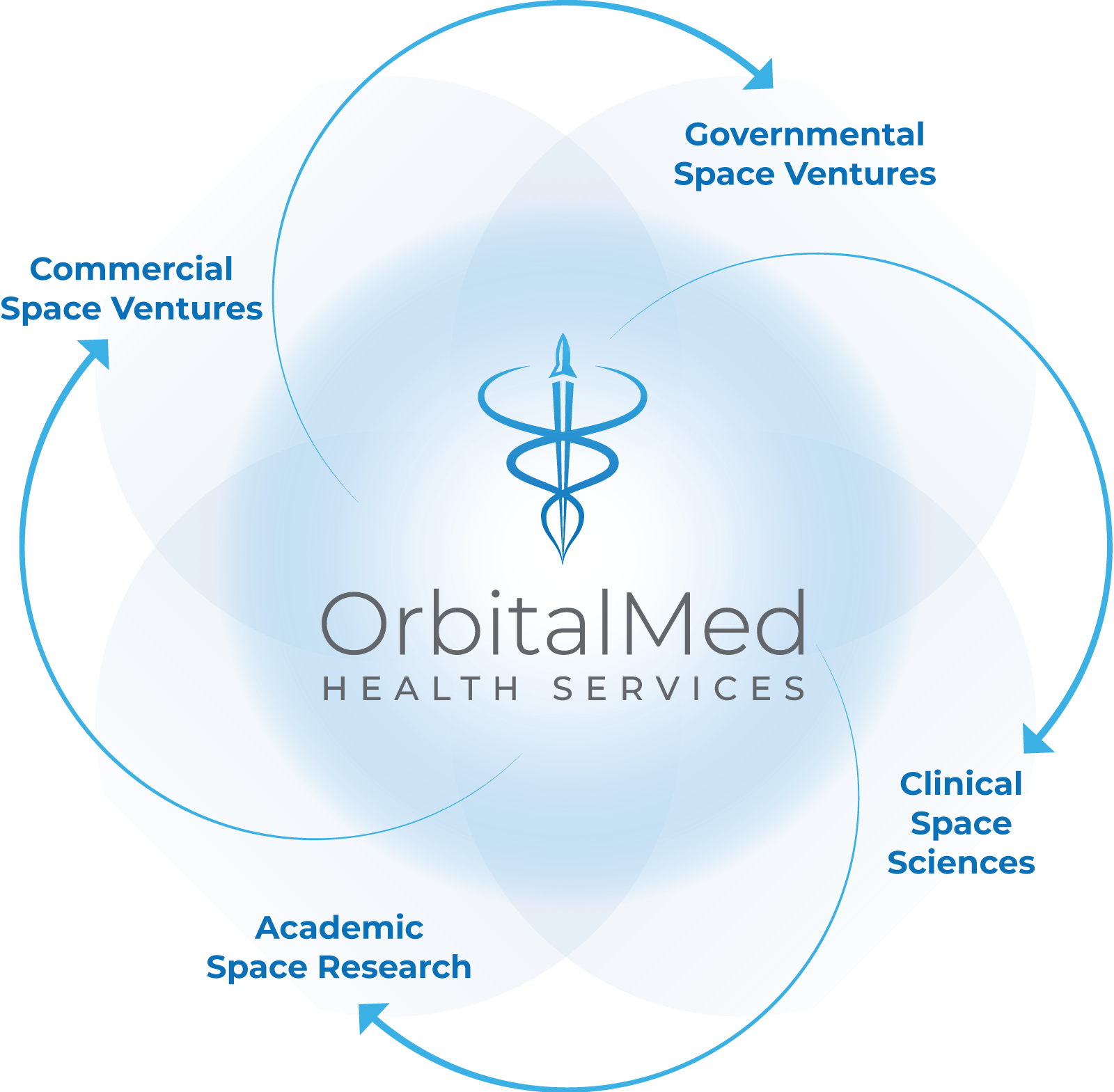
The growth of the commercial space industry will increase demand for specialized medical care and health services. As more people travel and work in space, healthcare providers will be needed for pre-flight screening, in-flight health monitoring, and post-flight rehabilitation. Long-duration missions will require expertise in areas such as radiation exposure, musculoskeletal health, behavioral health, and telemedicine. As space exploration and tourism expand, aerospace medicine and related healthcare fields will become increasingly important. We believe OrbitalMed is positioned to become the leading medical provider for commercial space ventures, government space ventures, academic space research, and clinical space sciences.




Artist’s conception of possible future OrbitalMed installations.

OrbitalMed is Here to Help Companies/Organizations Meet the Challenges and Opportunities on the Horizon
The need for a mission-based medical system engineered to keep astronauts healthy in microgravity and bring them safely back to Earth is immediate. The next few years will bring a surge of new developments.

ISS Transition (2030)

Commercial Crew Surge

Regulatory Inflection

Dual-Use IP Window
The opportunity to define the future of space medicine is here. OrbitalMed intends to help the industry build the foundation that will support the next generation of human activity beyond Earth.
(1) NASA Office of Inspector General — ISS Transition Plan & Commercial LEO Destinations. oig.nasa.gov
(2) FAA Aerospace Forecast Fiscal Years 2026–2046 – FAA Authorized Space Operations Forecast (FY2026-2036) chart. faa.gov
(3) Association of American Medical Colleges – The field of space medicine lifts off, Bridget Balch. aamc.org
(4) Cureus – Cleared for Launch: Pre-flight Medical Assessment in the Commercial Spaceflight Era. cureus.com
(5)FAA’s Report to Congress on the Evaluation of Commercial Human Space Flight Activities Most Appropriate for New Safety Framework. faa.gov
(6) RAND Corporation – Assessing the Readiness for Human Commercial Spaceflight Safety Regulations. rand.org