Building the Medical Infrastructure for the Commercial Space Era
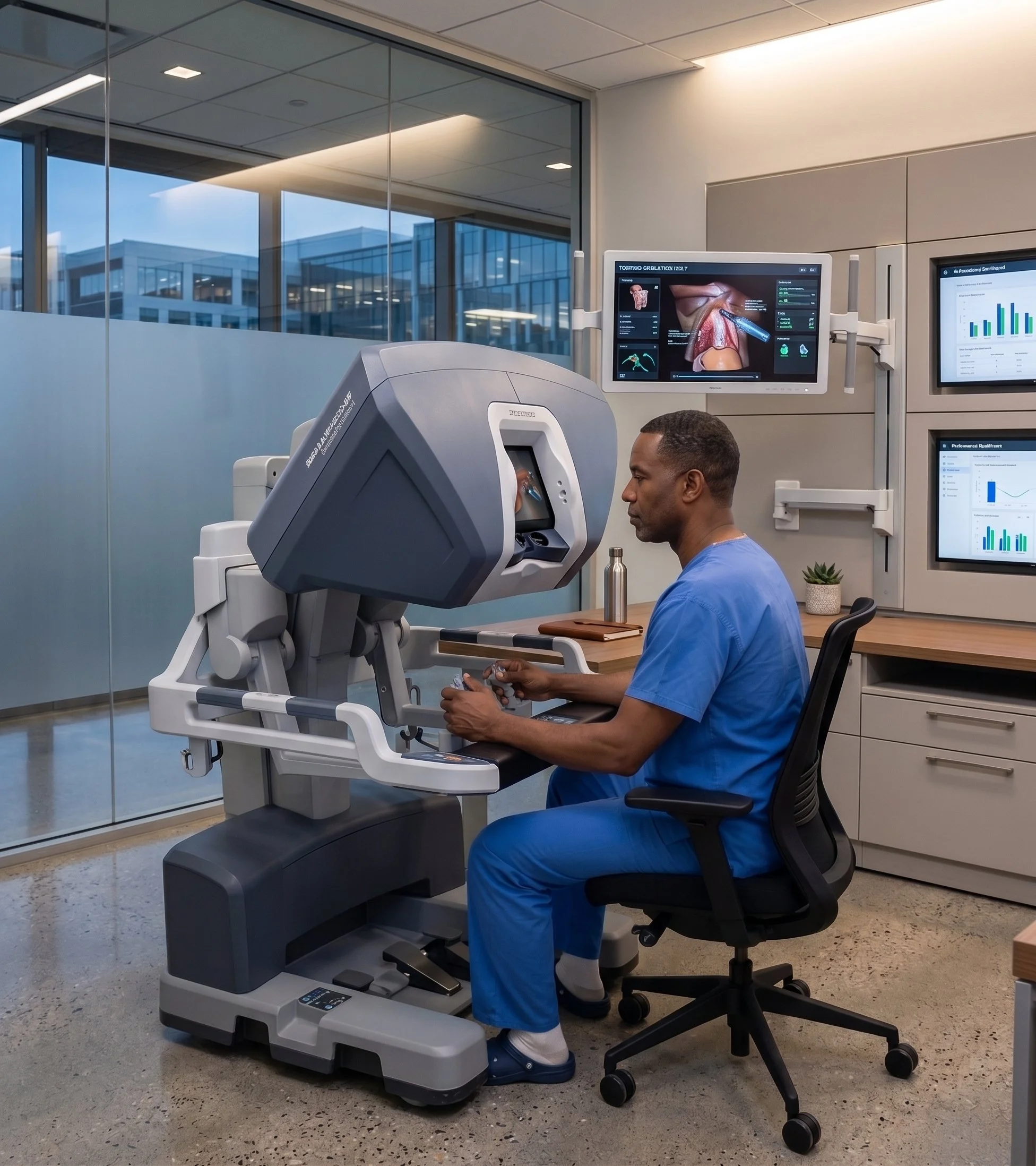
A growing space economy requires more than launch systems and spacecraft. It requires a healthcare ecosystem designed for the people who will travel beyond Earth.
The commercial space industry is creating a new category of demand.
As private-sector human spaceflight develops, medical support must evolve from a highly specialized capability serving a small astronaut corps into an infrastructure capable of supporting a broader and more diverse spaceflight community.
That transformation raises important questions.
Who determines medical readiness? How are space travelers evaluated and prepared? Who supports them during flight? How should medical professionals be trained? What standards should guide commercial space health and safety?
OrbitalMed was created to help address these challenges.
One Mission, Four Connected Capabilities
OrbitalMed's model brings together four core areas:
Medical Services & Support
End-to-end clinical operations spanning pre-mission assessment, in-flight medical support, monitoring, and post-mission recovery.
Training & Credentialing
Simulation-based training, certification, and continuing education for flight surgeons, mission medics, and other professionals supporting spaceflight and high-risk environments.
Research & Innovation
Applied research into areas such as AI diagnostics, telemedicine, predictive analytics, radiation, isolation, microgravity, and stress physiology.
Regulatory & Policy Advisory
Support for medical standards, governance, ethics, compliance, and alignment across agencies and organizations involved in human spaceflight.
Together, these capabilities are designed to address healthcare as an integrated part of mission planning rather than as a collection of disconnected services.
Closing the Gaps
OrbitalMed's view is that existing space-health systems were developed for a different era.
As the number and diversity of space travelers increase, fragmented medical support can create challenges around continuity, standards, accountability, and readiness.
An integrated model can help connect the different pieces.
Medical readiness informs operations. Operations generate data. Data informs research. Research supports improved protocols. Policy and standards help translate those capabilities into repeatable systems.
The result is a healthcare infrastructure designed to evolve as the industry evolves.
Experience Matters
OrbitalMed's leadership brings direct experience from medicine and human spaceflight.
The company was founded by former NASA astronaut physicians, including Dr. Bernard Harris and Dr. Robert Satcher, and its broader leadership includes specialists in aviation medicine, telehealth, healthcare operations, aerospace strategy, and human performance.
That combination of clinical and operational experience is particularly relevant to an industry where medical decisions can have mission-level consequences.
Spaceflight requires precision, preparation, and resilience.
Healthcare supporting spaceflight must meet the same standard.
Preparing for the Next Frontier
The future of human spaceflight will likely involve increasingly complex missions, new commercial participants, longer stays, and operations farther from Earth.
As those missions develop, medical infrastructure will need to develop with them.
OrbitalMed's vision is to provide continuity of care before, during, and after flight while helping advance the training, research, technology, and standards required for the next generation of space travel.
Because the future of spaceflight isn't just about getting people there.
It's about keeping them healthy, capable, and ready for what comes next.