The Future of Human Spaceflight Requires a New Approach to Healthcare
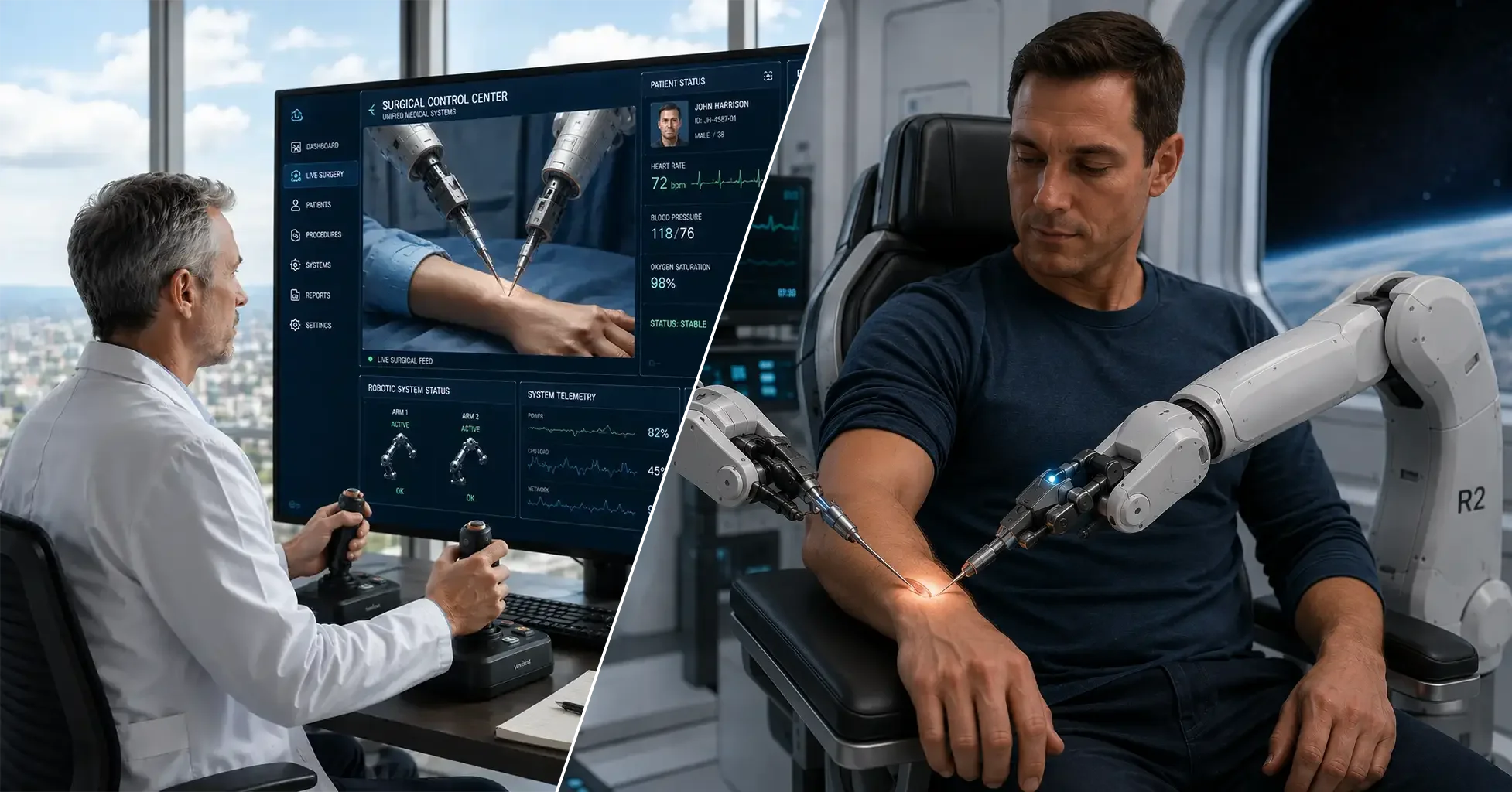
As human spaceflight expands beyond traditional astronaut missions, healthcare must evolve alongside the industry.
Human spaceflight is entering a new chapter.
Government agencies, commercial operators, research institutions, and other organizations are preparing for missions that could extend beyond low Earth orbit, support new space stations and lunar operations, and ultimately enable longer-duration human exploration.
But every advance in spaceflight brings a fundamental question with it:
How will we protect the people who make these missions possible?
For decades, human spaceflight medicine was designed around a relatively small population of highly trained government astronauts. The emerging commercial space industry presents a different challenge. Future space travelers may have more diverse medical backgrounds, missions may occur with greater frequency, and crews may operate in environments where traditional medical infrastructure is unavailable.
Healthcare therefore cannot remain an afterthought to spaceflight. It must become part of the mission architecture from the beginning.
Building Continuity of Care
OrbitalMed was established around this principle: space travelers need medical support throughout the entire mission lifecycle.
That begins before launch, with medical assessment, readiness planning, orientation, and certification. During flight, travelers may require access to medical expertise, monitoring, and teleconsultation. After returning to Earth, they may need medical evaluation and support as their bodies readjust to Earth's environment.
OrbitalMed's medical services are designed around this continuum of care — from pre-flight preparation to in-flight support and post-flight recovery.
This approach recognizes that spaceflight is not simply a transportation experience. It is a physiological and operational challenge that begins before launch and continues after landing.
Connecting Medicine, Research, and Policy
The challenge is bigger than individual medical evaluations.
As the space industry grows, medical systems must also become more integrated. OrbitalMed's approach connects three traditionally separate areas: clinical operations, research translation, and policy alignment.
The objective is to create a system in which information generated through missions can inform future medical practices, while research can translate into better operational procedures and policy can help establish consistent standards.
This creates what OrbitalMed describes as a "learning health system" for space — one in which every mission has the potential to contribute to a stronger body of knowledge and better preparation for the missions that follow.
Preparing for What Comes Next
The farther humans travel from Earth, the more important onboard medical capability becomes.
On a short mission, medical support on Earth may remain relatively accessible. During extended missions, however, distance can fundamentally change the way medical care must be delivered.
That means future space medicine may increasingly depend on technologies and capabilities such as remote diagnostics, predictive health analytics, telemedicine, decision-support systems, and other tools that enable medical teams to respond effectively in challenging environments. OrbitalMed's research and innovation program is focused on advancing these areas.
The future of human spaceflight will be defined by more than spacecraft and launch systems.
It will also depend on the medical infrastructure that keeps people healthy, capable, and ready for the journey.
OrbitalMed is building toward that future — bringing mission-ready medicine to the next era of human spaceflight.